


Sharing on social networks


. Magnesium Ingot (Mg)
Magnesium Ingot (Mg)
Overview
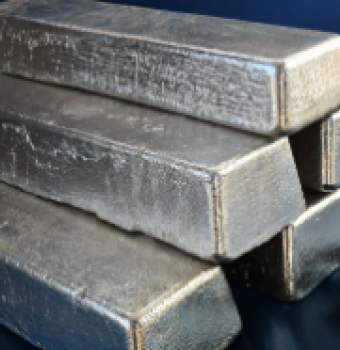
Magnesium (Mg) is the lightest commercially available structural metal and is widely recognized for its exceptional strength-to-weight ratio. Magnesium ingot is the primary commercial form of refined magnesium, produced after extraction and purification processes and supplied as the standard raw material for a broad range of downstream industrial applications.
Owing to its low density, excellent machinability, and favorable mechanical properties, magnesium has become an indispensable material in modern manufacturing industries.
Applications
Automotive and Transportation Industries
The most significant application of magnesium is in lightweight engineering. Magnesium alloys are extensively used in the production of automotive, aerospace, railway, and bicycle components, where weight reduction directly contributes to improved fuel efficiency, lower emissions, and enhanced overall performance.
Due to their outstanding castability, magnesium alloys are particularly suitable for high-pressure die casting of transmission housings, engine components, wheels, and various structural parts.
Aluminum Alloy Production
Magnesium is an essential alloying element in aluminum alloys, particularly the 5xxx series. It significantly enhances the strength, corrosion resistance, and durability of aluminum products while maintaining their lightweight characteristics.
Metallurgical Industry
Pure magnesium is widely employed in steelmaking and cast iron production as a desulfurizing and refining agent. It improves molten metal quality by reducing sulfur content and modifying the metallurgical structure, resulting in superior mechanical properties.
Magnesium Ingot Production
Commercial magnesium is produced using two principal technologies:
-
Thermal Reduction Process (Pidgeon Process)
-
Electrolytic Process (Dow Process)
Pidgeon Process (Thermal Reduction)
The Pidgeon Process is one of the most widely adopted magnesium production methods in Asia. It is based on the vacuum reduction of magnesium oxide using ferrosilicon as the reducing agent.
Raw Materials
The principal raw materials include:
-
Dolomite (CaCO₃·MgCO₃)
-
Ferrosilicon (FeSi) as the reducing agent
Calcination
Dolomite is calcined at high temperatures to produce a mixture of magnesium oxide (MgO) and calcium oxide (CaO).
Reduction Reaction
The calcined material is blended with finely ground ferrosilicon and charged into sealed steel retorts operating under vacuum conditions. The retorts are heated to approximately 1,200°C, where the reduction reaction takes place.
The overall reaction can be expressed as:
2MgO + 2CaO + FeSi → 2Mg(g) + Ca₂SiO₄ + Fe
During this process, magnesium is generated in the form of vapor.
Condensation
The magnesium vapor migrates to the cooler section of the retort, where it condenses into solid crystalline deposits commonly known as magnesium crowns.
Melting and Casting
The condensed magnesium crowns are collected, remelted, refined to remove impurities, and finally cast into standard magnesium ingots for commercial distribution.
Electrolytic Process (Dow Process)
The electrolytic process is based on the electrolysis of molten magnesium chloride (MgCl₂). Although this technology was historically the dominant production route, it remains in use in several regions due to its high production efficiency.
Magnesium Chloride Production
Magnesium chloride is obtained from seawater, natural brines, or mineral resources such as dolomite through chemical processing.
Electrolysis
Molten magnesium chloride is subjected to electrolysis, producing molten magnesium at the cathode while chlorine gas is released at the anode.
MgCl₂ → Mg + Cl₂
Casting
The molten magnesium is collected, refined when necessary, and cast into standardized magnesium ingots suitable for industrial applications.